
Sailors stressed and exhausted after months trapped by Strait of Hormuz blockade
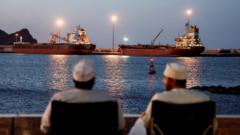
Mariners Face Mental and Physical Toll After Months of Strait of Hormuz Standoff
On days when the waters are deceptively calm, Captain Hassan Khan momentarily forgets that his vessel has been immobilized in the heart of a conflict zone for three months. "It is really strange that everything looks normal outside, but people inside are not calm," the Pakistani sailor remarked, requesting anonymity. While the Gulf region may appear peaceful from the surface, the reality is starkly different. Since late February, Khan and approximately 20,000 other mariners have been stranded in or near the Strait of Hormuz, caught in the crossfire of the US-Israeli conflict with Iran.
Once a vital artery for global commerce, transporting one-fifth of the world’s oil and gas, this waterway has effectively stalled. Missiles streak across the sky while mines lurk beneath the surface. Despite the peril, Khan’s crew attempts to maintain a standard work schedule. However, morale has deteriorated significantly; the usual cheerful banter has been replaced by anxious silence, broken only by the ringing of mobile phones. The crew is too hesitant to take rare shore leave, and the constant threat of violence has left them on edge, startling even during sleep. "The stress stays in our mind all the time," Khan stated. "Everyone is just exhausted – both physically and mentally."
Blocked Passage and Supply Chain Disruptions
Even absent the immediate threat of missiles and naval mines, the 1,600 vessels estimated by the International Maritime Organisation (IMO) to be trapped on the wrong side of the strait cannot depart. Shortly after hostilities erupted, Iran closed the narrow channel—the sole exit from the Gulf—and declared that no ship could pass without explicit approval.
"It is as if we are trapped in a pond. There's only one way out, and that's Hormuz," explained Captain Shafiqul Islam, commanding the Bangladesh-owned tanker Banglar Joyjatra. The vessel is carrying roughly 37,000 tonnes of fertilizer destined for South Africa. Since the conflict began, Islam has attempted to navigate the strait twice, both resulting in failure.
Following the ceasefire announcement on April 8, Islam learned that the Islamic Revolutionary Guard Corps (IRGC) had granted another vessel permission to transit. He joined four other ships in steering toward the critical waterway, only to receive warnings against proceeding. Nine days later, he attempted passage again after Iran proclaimed the strait "completely open" for commercial traffic in accordance with the truce. However, Iran quickly rescinded the decision as the US maintained its blockade of Iranian ports. By that time, Banglar Joyjatra was within 30 nautical miles of the strait. With radio warnings of attacks intensifying, Islam had no choice but to turn the ship around.
To ensure safety, many vessels have relocated to different ports or anchored offshore within the Gulf. Consequently, securing essential supplies like food and water has become increasingly difficult. While it remains possible to obtain provisions without entering ports—leveraging established supply networks in areas like Dubai, Abu Dhabi, and Kuwait—deliverances are now erratic.
Rashedul Hasan, chief engineer on the Banglar Joyjatra, noted a dramatic spike in the cost of water, the most significant increase among essential goods. "We purchased about 180 tonnes of water for the ship two days ago. Earlier, it would cost between $1,500 and $2,000. Now, it costs us $11,000," he said.
A Korean sailor, who also requested anonymity, added, "It also feels like some food and water suppliers are trying to take advantage of the situation and make excessive profits."
As summer approaches, the need for water will intensify. Air temperatures already surpassed 30C in May and could reach as high as 45C. On Khan’s vessel, while basic provisions like beef and chicken are still available, vegetables and lentils are becoming scarce. "We still have food and water, but things are simpler now," Khan noted.
A Narrow Escape
Despite these hardships, Captain Islam considers himself fortunate compared to others. During the second day of the conflict, his ship found itself merely 200 meters (656 feet)—roughly the length of a medium-sized tanker—away from direct engagement.
Source: BBC News Generated at: 2026-06-02 23:40:27 UTC
