Flesh-eating screwworm arrives in US with first case detected in Texas cattle
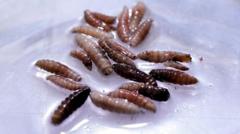
New World Screwworm Parasite Confirmed in Texas Cattle, Marking First US Case in 60 Years
The United States has recorded its first instance of the New World Screwworm (NWS) since 1966, following the confirmation of a case in a Texas calf. The US Department of Agriculture (USDA) announced the discovery on Wednesday evening, noting that the flesh-eating parasite has been moving northward across Mexico over the last year.
The infested animal was identified in La Pryor, Texas, a location roughly 30 miles (48km) from the southern border with Mexico. This finding confirms long-standing concerns among US cattle ranchers, who have feared that an outbreak could decimate herds, lower beef output, and subsequently raise prices for consumers.
Screwworms are parasitic flies that target warm-blooded animals. Female flies deposit their eggs in open wounds or mucous membranes; upon hatching, the larvae burrow into living tissue with sharp mouthparts. If the infestation is not treated, it can be fatal to the host. While the parasite can affect pets and humans, human cases are uncommon and the risk to people is considered low. Furthermore, the USDA stated that the fly does not pose any food safety risks.
The specific case involved a three-week-old calf, where larvae were discovered in the umbilical region. Because the movement of infested livestock is the primary method of transmission, the USDA and Texas officials have implemented a 20km (12.4 miles) detection and quarantine zone around the site.
To combat the spread, authorities are preparing to release millions of sterile male screwworms. Since female flies mate only once, mating with sterile males results in unfertilized eggs that will not hatch, effectively suppressing the population. USDA officials stated that they have been preparing for such a scenario for some time and credit these measures with delaying the parasite’s entry into the US by one year.
Agriculture Secretary Brooke Rollins confirmed that USDA staff have already deployed to South Texas to assist with containment efforts and urged livestock producers to remain watchful. However, the federal response has faced criticism from Texas Agriculture Commissioner Sid Miller. Speaking to Reuters, Miller argued that the USDA acted too slowly, relying exclusively on the sterile fly release program, which he described as a partial solution that takes years to fully take effect, rather than utilizing all available tools.
Source: BBC News Generated at: 2026-06-04 03:45:20 UTC