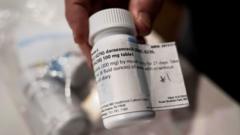
Millions of breast cancer patients could safely avoid chemotherapy, study suggests

New Genetic Test May Spare Millions of Breast Cancer Patients from Unnecessary Chemotherapy
A groundbreaking international study indicates that a significant number of breast cancer patients could safely forgo chemotherapy, thanks to a new DNA testing method. According to trial results, this tool allows medical professionals to accurately identify which patients will benefit from the aggressive treatment and which will not.
Led by University College London (UCL), the research involved over 4,000 newly diagnosed patients aged 40 and older across the UK, Norway, Sweden, Australia, New Zealand, and Thailand. The study utilized a gene test known as Prosigna, which analyzes the activity of 50 genes associated with breast cancer growth to estimate the risk of the disease returning.
The findings revealed that more than two-thirds of the participants had low scores, meaning they were unlikely to benefit from chemotherapy. Instead, these individuals were treated with hormone therapy alone. This is a significant development, as chemotherapy is associated with severe side effects, including fatigue, nausea, hair loss, compromised immune function, and potential fertility issues.
While surgery remains the primary treatment for removing tumors, chemotherapy is frequently prescribed afterward to reduce the risk of recurrence, particularly in early-stage cases where cancer has spread to nearby lymph nodes. However, UCL noted that clinicians have long been concerned that this treatment offers minimal advantage for the most common types of breast cancer.
The data showed that the five-year survival rate for the group spared from chemotherapy was 93.7%, a figure closely mirroring the 94.9% survival rate observed in patients who did receive chemotherapy. Based on these results, UCL estimates that more than 5,000 patients within the UK’s National Health Service (NHS) could avoid chemotherapy annually.
Karen Bonham, a 64-year-old participant from Cardiff, described the outcome as an "immense relief," comparing the feeling to "Christmas." Having avoided chemotherapy thanks to the Prosigna test, she has instead undergone radiotherapy and hormone therapy for the past eight years. Reflecting on her experience, Bonham said, "Cancer diagnosis and treatment can be shocking. It certainly propels you into a world of uncertainty. Life priorities realign - you simply want to survive."
The study’s conclusions are set to be presented at the American Society of Clinical Oncology’s annual meeting in Chicago, the world’s largest cancer conference, on Saturday.
Professor David Miles, a prominent oncologist, labeled the results "practice-changing." He told BBC’s Newshour, "We can now confidently predict many patients will get no benefit at all, and therefore there's no need for them to have the chemotherapy." He emphasized that the test enables doctors to "confidently define a large population of women who simply aren't going to benefit and don't need to go through all that unpleasantness for no benefit at all."
Highlighting the inefficiency of previous protocols, Professor Miles added, "We used to give chemotherapy to 100 women to benefit 10, knowing that 90 didn't need it."
Other patients have also welcomed the development. Tanya Hutson, who was diagnosed with breast cancer in 2022 and underwent chemotherapy, called the new DNA test "absolutely amazing." She described the chemotherapy experience as "brutal" and stated, "For all these people out there who don't need it but are still getting it - it's an absolute game changer." She credited the advancement to proper research funding, noting, "It just proves what happens when money is put into research."
Currently, it remains unclear whether these findings apply to women under the age of 40. UCL reported that results for this demographic are still several years away.
Source: BBC News Generated at: 2026-05-30 13:14:42 UTC