Britain's protected birds of prey still being shot, trapped and poisoned, says RSPB
RSPB Reveals Persistent Illegal Killing of Protected Birds of Prey in Britain
Despite decades of statutory safeguards, Britain’s rarest birds of prey continue to fall victim to illegal shootings, trapping, and poisoning, according to a new report from the Royal Society for the Protection of Birds (RSPB). The charity’s findings, set for release on Wednesday, document 921 verified attacks between 2015 and 2024. The RSPB notes that more than half of these incidents occurred on or adjacent to estates managed specifically for game shooting.
Mark Thomas, who leads the RSPB’s investigations unit, asserted that the primary motive behind these killings is financial. Predatory birds are often targeted to prevent them from preying on young pheasants, partridges, or grouse, thereby ensuring a higher number of birds remain available for paying shooters. While shooting organizations firmly reject claims that persecution is widespread within the industry—attributing such acts to a small minority and condemning them entirely—the RSPB is advocating for a licensing system for gamebird shooting in England and Wales. The charity argues that estates should face stricter penalties when protected species are harmed on their land.
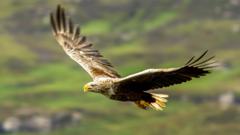
The species most frequently targeted include barn owls, goshawks, hen harriers, peregrine falcons, red kites, and eagles. The RSPB maintains a rigorous standard for its data, classifying cases as "confirmed" only when supported by video footage, eyewitness accounts, or forensic evidence. Its specialized investigations team, comprised of bird experts and former police officers, works to identify those responsible.
This year, evidence gathered by RSPB investigators, including hidden-camera recordings, contributed to three convictions. Two of these cases involved birds that were beaten to death after being caught in traps. Although some live-capture traps are legally permitted for pest control of species like pigeons and crows, regulations mandate regular checks and the immediate release of non-target species. The third conviction stemmed from covert surveillance at a hen harrier roost in the Yorkshire Dales. Investigators captured footage of head gamekeeper Racster Dingwall arriving with a shotgun, along with audio recordings discussing the potential killing of protected birds and the satellite-tagging of a harrier. Dingwall subsequently admitted to offenses related to an attempt to kill a protected hen harrier and was fined £1,520.
While the RSPB acknowledges a recent decline in recorded incidents, it contends that criminal prosecutions alone are insufficient to address the long-term issue. The organization is pushing for a licensing regime similar to the one governing red grouse shooting in Scotland. Under this proposal, licenses could be suspended or revoked based on the civil standard of proof, even in cases where criminal prosecution is challenging.
Shooting groups oppose these measures, warning that they would unfairly penalize responsible landowners and jeopardize conservation efforts. Dr. Marnie Lovejoy of the British Association for Shooting and Conservation (BASC) told the BBC that the focus should remain on strengthening law enforcement to prosecute individuals committing crimes, stating they have no place in the modern shooting community. She argued that licensing would introduce redundant regulation to an already heavily regulated sector. Lovejoy highlighted the sector’s significant economic and environmental impact, noting that it contributes approximately £500 million annually to nature recovery, supporting an estimated 26,000 full-time jobs and 14 million workdays.
The government has not endorsed the RSPB’s specific proposals but has committed to collaborating with the shooting sector and other stakeholders to explore broader measures, including licensing. A spokesperson for Defra stated, "Many estates already meet high environmental standards, and we want all estates to achieve these same high standards."
Professor Davy McCracken from Scotland’s Rural College, who has spent 35 years researching upland management and wildlife, suggests that the friction between preserving birds of prey and managing land for grouse shooting is fundamentally economic. "That is where the root of the conflict arises," he observed.
Source: BBC News Generated at: 2026-05-25 23:35:26 UTC