Microsoft testing wearable AI gadget aimed at office workers
Microsoft Pilots New AI Wearables and Desktop Devices for the Modern Office
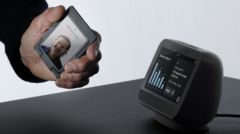
Microsoft is currently experimenting with novel wearable technology featuring artificial intelligence, showcasing two hardware prototypes during its annual developer conference. Steven Bathiche, a Microsoft executive, presented these concepts, which are designed to assist professionals who rely heavily on AI tools. The first prototype is a compact, desk-bound cube featuring a screen activated by both touch and voice commands. The second is a wearable "access badge" intended to be worn around the neck or clipped to a belt, providing immediate access to AI-driven workplace functions.
Satya Nadella, Microsoft’s chief executive officer, described these innovations as a "new form factor" for technology. Although Microsoft has not committed to releasing either product commercially, the company noted that ongoing pilot programs with several hundred internal employees will guide future development of such hardware designs.
This effort follows Microsoft’s previous, albeit challenging, foray into wearable tech. The company spent nearly a decade developing the HoloLens headset, a device similar to Meta’s Quest or Apple’s Vision Pro. Despite initial plans to secure a multi-billion-dollar contract with the US Army, testing issues led Microsoft to announce in 2024 that it would cease production of the HoloLens. Meanwhile, Google is also revisiting the wearable market, planning to reintroduce "smart glasses" more than ten years after its highly publicized Google Glass failure.
In promotional videos for what Nadella termed "Project Solara," users engaged with office-based AI agents by tapping the screens of the new devices. These agents function as autonomous AI bots that assist workers with tasks such as coding. This rise in AI assistance has been frequently cited by tech leaders as a factor in recent industry-wide layoffs affecting thousands of employees.
The new Microsoft devices integrate with various software and PCs, enabling users to interact with their AI agents without being tethered to a laptop or desktop. Bathiche described the wearable badge as lightweight and optimized for "agent interactions on the go." In a recorded demonstration, Nadella was seen wearing the badge on a lanyard, resembling a standard office ID card. The device also includes a small camera. During the presentation, Bathiche used his fingerprint to activate the badge, pointed it at the conference audience, and commanded it to capture photos for his review, a task the device completed successfully.
In a related blog post, Bathiche explained that the camera enables agents to better perceive and act upon their surroundings. However, this feature invites scrutiny; cameras on other AI-focused devices, such as Meta’s AI eyeglasses, have faced significant criticism regarding the ethics and mechanics of video recording and data storage.
Source: BBC News Generated at: 2026-06-02 21:47:42 UTC