
'Crazy' phone call between Trump and Netanyahu complicates Iran talks
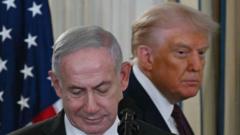
Public Friction Between Trump and Netanyahu Adds Complexity to Iran Diplomacy
Donald Trump has joined the ranks of US presidents who have found themselves in conflict with Benjamin Netanyahu, following reports of a heated disagreement between the two leaders over military operations in Lebanon. This rift has reportedly jeopardized Washington’s ongoing diplomatic efforts regarding Iran. In response to Israeli airstrikes on Lebanon, Tehran has threatened to halt negotiations with the United States, posing a significant obstacle to Trump’s goal of ending what remains an unpopular conflict with Iran.
During an interview on Wednesday for the Pod Force One podcast, Trump confirmed to a journalist that he had spoken harshly to the Israeli prime minister during a phone conversation on Monday. Addressing an Axios report that claimed Trump called Netanyahu "effing crazy" and accused him of ingratitude, Trump stated, "I did." He clarified his emotional state, noting, "I wouldn't say angry. I was a little bit perturbed at his constantly fighting with Lebanon, you know." Despite the friction, Trump emphasized his positive working relationship with the Israeli leader, adding, "I like Bibi a lot. And I work very well with him."
The tension arises at a critical juncture, as Trump considers a potential agreement to prolong the US-Iran ceasefire and initiate discussions on the future of Tehran’s nuclear program. The stability of the Strait of Hormuz, a crucial artery for global shipping, is also implicated in these negotiations.
Netanyahu, however, downplayed the severity of the dispute. Speaking to CNBC on Wednesday, he characterized the disagreement as typical of close relationships. "Sometimes we have, as in the best of families, you have these tactical disagreements," he said. "We always find a way to work them out, and we do so as great friends." He further remarked that the two leaders are capable of disagreeing in the morning and reaching an accord by the afternoon.
Experts warn that the exchange may signal deeper frustrations within the White House regarding the alignment of US and Israeli strategic objectives, nearly 100 days after strikes on Iranian targets began on February 28. Brett Bruen, a former diplomat and head of crisis communications firm Global Situation Room, told the BBC that Netanyahu has a history of acting independently of Washington’s wishes. "Trump… decided to take the plunge with him, and is now learning a really hard lesson about what happens when you get into war with a pretty mercurial leader that has an agenda which doesn't always align with your own priorities," Bruen observed.
While both leaders share the primary objective of preventing Iran from acquiring nuclear weapons, their interests diverge concerning Lebanon. Israel remains committed to targeting Hezbollah, the Iran-backed militia, even as US-Iran talks proceed. Bruen noted that expanded attacks on Beirut or deeper incursions into Lebanon could derail these diplomatic efforts, particularly since Iran insists that any ceasefire must encompass Lebanon.
This geopolitical friction coincides with shifting public opinion in the United States. According to a Pew Research Poll released in April, 60% of Americans now hold a negative view of Israel, a sharp increase from the 42% who held such views before the 2023 war with Hamas began.
Additionally, several prominent conservative voices have criticized what they perceive as Israeli influence in pushing Trump toward war with Iran—claims denied by both the White House and Netanyahu. Joe Kent, who resigned as head of the National Counterterrorism Center in March, was among those speaking out. He attributed the conflict to pressure from Israel and its influential American lobby, stating, "we started this war due to pressure from Israel and its powerful American lobby."
In this political climate, some analysts suggest Trump may have a domestic incentive to distance himself from Netanyahu. Bruen argued, "I think there is a political necessity now to create daylight between Israel and the US." He concluded that certain actions taken by Netanyahu, whether in Lebanon or Gaza, have become politically sensitive for Trump and the Republican Party.
Source: BBC News Generated at: 2026-06-03 20:28:01 UTC


