Ebola risk raised to 'very high' in DR Congo
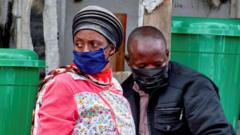
Ebola Threat Escalates to 'Very High' in Democratic Republic of Congo
The World Health Organization (WHO) has escalated the global health risk associated with the ongoing Ebola epidemic in the Democratic Republic of Congo (DRC) from "high" to "very high." In a statement released on Friday, WHO Director-General Dr. Tedros Adhanom Ghebreyesus clarified that while the threat remains "low" on a worldwide scale, the risk within the broader African region has been categorized as "high."
The current outbreak is driven by the Bundibugyo strain of the Ebola virus, a rare variant for which no certified vaccine currently exists. This strain is particularly lethal, claiming the lives of approximately one-third of those infected. To date, the crisis in the DRC has led to 750 suspected cases and 177 suspected fatalities.
In response to the escalating crisis, researchers at Oxford University in the United Kingdom are accelerating the development of a novel vaccine. Leveraging the technology behind the AstraZeneca COVID-19 vaccine, the team aims to have the candidate ready for clinical trials within two to three months. However, Dr. Tedros and other experts caution that efficacy is not yet guaranteed, necessitating further animal studies and human trials. The BBC reports that animal testing for this Oxford-developed vaccine is already underway. Once medical-grade material is available from Oxford, the Serum Institute of India has agreed to handle mass production.
Concurrently, a different experimental vaccine for the Bundibugyo strain is being developed. Although Dr. Vasee Moorthy, the WHO’s research and development adviser, labeled it "the most promising" earlier this week, its timeline is longer. It is estimated to take six to nine months before any doses are available for testing. Dr. Moorthy noted that this candidate would function similarly to Ervebo, the vaccine currently deployed against the more prevalent Zaire species of Ebola.
During a press briefing in Geneva on Friday, Dr. Tedros outlined the updated risk assessment: "We are now revising our risk assessment to very high at the national level, high at the regional level, and low at the global level." He provided specific figures, stating that 82 cases have been confirmed in the DRC, resulting in seven deaths.
The situation in neighboring Uganda is currently described as "stable," despite the presence of two confirmed Bundibugyo cases and one death. Both Ugandan cases involved individuals who had traveled from the DRC.
Ebola is a severe, often fatal illness caused by a virus. While the Bundibugyo strain is less deadly than some other variants, its rarity means fewer containment tools are available. The virus typically circulates in animal populations, particularly fruit bats, and human outbreaks usually begin when individuals consume or handle infected animals. Although the WHO declared a public health emergency of international concern on Sunday, it emphasized that the situation has not reached pandemic levels.
Dr. Tedros highlighted that building community trust is critical to managing the outbreak, warning that violence and instability in the conflict-affected region are obstructing response efforts. Some infections have been identified in areas controlled by rebel groups, complicating containment strategies.
Tensions recently boiled over when angry relatives set fire to a hospital in eastern DRC. The incident occurred at Rwampara General Hospital after medical staff refused to release the body of a deceased patient due to contamination risks. Luc Malembe Malembe, a local politician who witnessed the event, told the BBC that the crowd threw projectiles at the facility and ignited tents used as isolation wards. Police discharged warning shots to disperse the crowd, and medical staff in the Ituri province—near Bunia, where nearly all cases are concentrated—were placed under military protection.
The body of a person who died from Ebola is highly infectious, making safe burials essential to prevent further transmission. Fear is widespread in the affected regions of eastern DRC as the death toll climbs. "Ebola has tortured us," a young taxi driver in Rwampara expressed to the BBC. "I am scared because people are dying very fast... we are really afraid."
Local resident Fred Kiza told the BBC that such panic is a "normal" reaction to a disease of this magnitude.
Source: BBC News Generated at: 2026-05-22 16:23:08 UTC